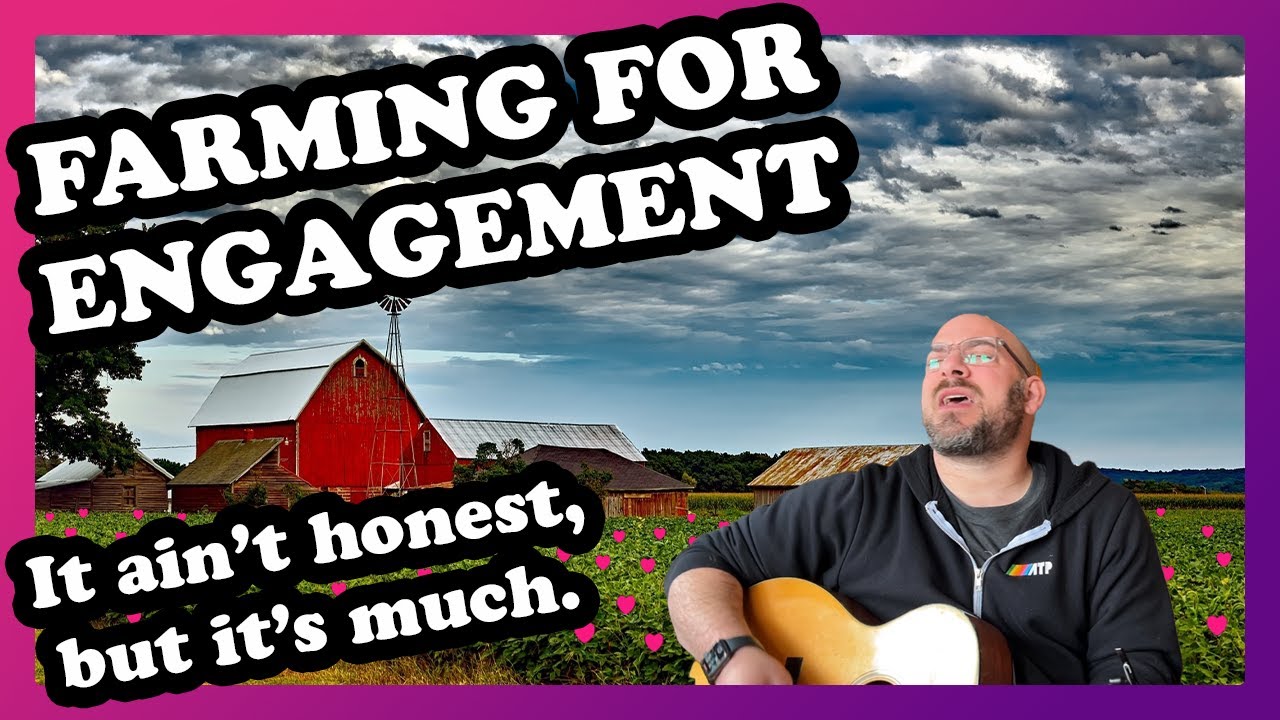
Engagement farming is incredibly common these days. You may know it by another name, like engagement baiting, rage baiting, or even clickbait. This tactic is almost unavoidable at this point, especially if your personal "algorithm" has noticed you engaging in even just one bait post.
So what is engagement farming? The term refers to a tactic used on social media to bait people into engaging with (watching, liking, commenting on, etc.) their posts, artificially boosting their engagement metrics. Many people might do this for attention, but often there is some financial gain to it. For many social media platforms, more engagement = more money paid to the creator. Engagement farming is generally looked down upon, but is seen as easy money by those creating it.
If you are on any social media platform, you have probably seen engagement farming of some sort. Here are a few examples:
- Clickbait: a post that entices the reader with sensational terms to click a link in order to learn more. This can be something simple, like the title of an article or video, or a post that uses vague but intriguing language that demands you open the comments and click on a link in order to learn the real story. These links often reveal a story that is much less interesting then the reader initially thought from the baited title or post. This drives up engagement to the link or the posts comments.
- "Celebrity feeds raw milk to baby!!! Find out who! Doctors are furious!!"
- "Doing this could have DEVASTATING consequences! Link in the comments!!"
- Rage bait: a post that is intended to anger or frustrate the reader, causing them to overly engage in the comments. This could come in the form of a video, like if the creator of a cooking video "accidentally" drops a huge egg shell into their batter, or text post, like if someone were to post a genuinely unpopular opinion or otherwise inflammatory sentence. People are more likely to write angry comments on the post, like the comments of others, or, in case of a video, view the video multiple times. Especially in the case of videos, the bait part is often left until later on in the otherwise normal video, meaning you are unaware that it is bait until you've watched most of it, which counts as a view.
- "Am I wrong for thinking that chicken needs to be washed with laundry detergent before cooking it??? I need to know that it is CLEAN and FREE OF BACTERIA before I feed it to my newborn!"
- 2 minute video of a DIY craft, but near the end of the first minute, they very purposefully make something incredibly crooked.
- Chain posts: a post that plays on the users' sense of obligation, and often their emotions, calling for a great number of users to like, share, or comment. Some will also add a consequence to the end if the user does not complete the task (think old school chain mail or chain emails!)
- "Like this post if you love your mom"
- "Comment 'amazon' for a link to this cute jacket!!"
- "I DO NOT GIVE MARK ZUCKERBERG PERMISSION TO USE MY PHOTOS! CLICK THE SHARE BUTTON IF YOU AGREE!!!"
- "You have been MARKED, share this email with 15 friends within the next 3 minutes or SOMETHING BAD will happen tonight!"
- Copycat posts: if another user's post is getting a lot of engagement, engagement farmers may copy that post in some way in hopes of getting that same success. This could be a direct copy and paste with no changes, or a similar post with very slight differences as a form of plausible deniability.
- Bot engagement: a series of bots can be created or bought for the purpose of engaging with a specific user's posts. A number of automated "accounts" will engage with the posts on a schedule to create fake engagement statistics.
Thanks for the post, Maude! Do you think that engagement farming really just harmless content, or is it quietly taking over our feeds? With tactics like clickbait, rage bait, and chain posts, it feels like social media is becoming less about connection and more about manipulation. If even commenting “is this bait?” gives these posts what they want, how can we actually avoid feeding the algorithm and start taking back control of what we see? I really struggle in finding the space between bait and catch here myself. Thanks!
ReplyDelete