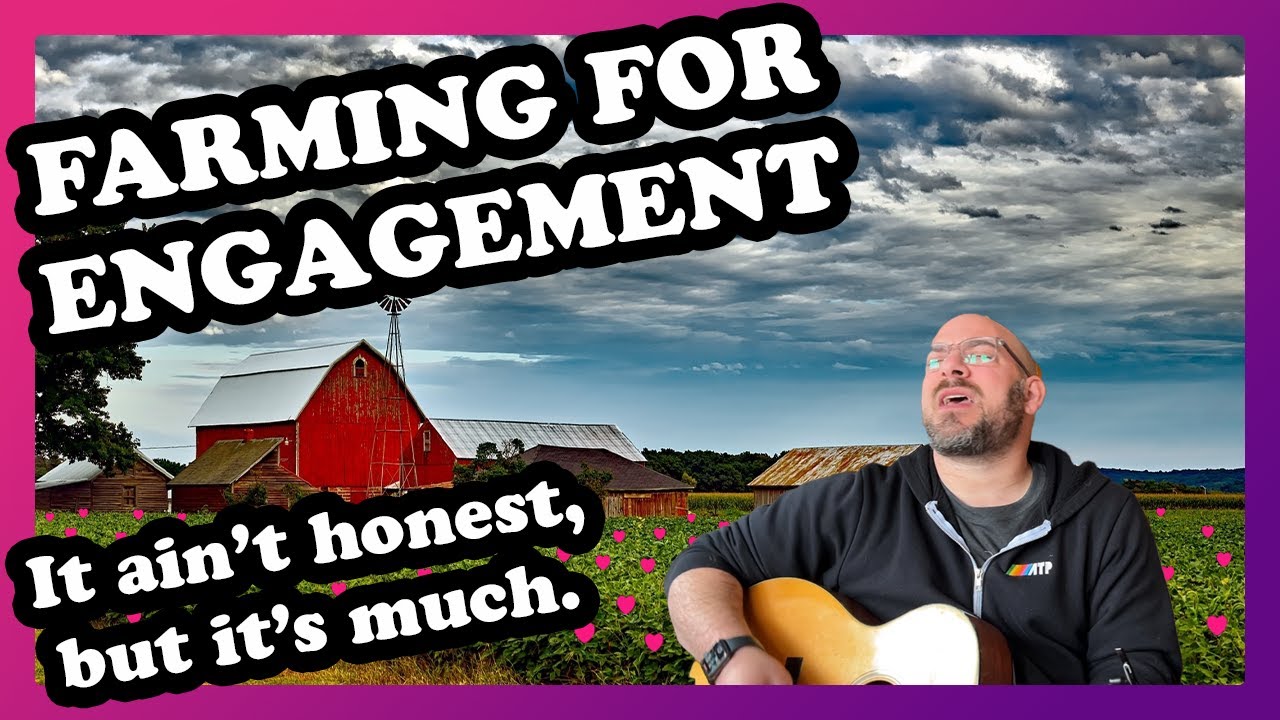
Olivia Weiss Post #10 - Stop Engaging with Engagement Farming!!


Engagement farming is incredibly common these days. You may know it by another name, like engagement baiting, rage baiting, or even clickbait. This tactic is almost unavoidable at this point, especially if your personal "algorithm" has noticed you engaging in even just one bait post.

So what is engagement farming? The term refers to a tactic used on social media to bait people into engaging with (watching, liking, commenting on, etc.) their posts, artificially boosting their engagement metrics. Many people might do this for attention, but often there is some financial gain to it. For many social media platforms, more engagement = more money paid to the creator. Engagement farming is generally looked down upon, but is seen as easy money by those creating it.

If you are on any social media platform, you have probably seen engagement farming of some sort. Here are a few examples:

  • Clickbait: a post that entices the reader with sensational terms to click a link in order to learn more. This can be something simple, like the title of an article or video, or a post that uses vague but intriguing language that demands you open the comments and click on a link in order to learn the real story. These links often reveal a story that is much less interesting then the reader initially thought from the baited title or post. This drives up engagement to the link or the posts comments.
    • "Celebrity feeds raw milk to baby!!! Find out who! Doctors are furious!!"
    • "Doing this could have DEVASTATING consequences! Link in the comments!!"
  • Rage bait: a post that is intended to anger or frustrate the reader, causing them to overly engage in the comments. This could come in the form of a video, like if the creator of a cooking video "accidentally" drops a huge egg shell into their batter, or text post, like if someone were to post a genuinely unpopular opinion or otherwise inflammatory sentence. People are more likely to write angry comments on the post, like the comments of others, or, in case of a video, view the video multiple times. Especially in the case of videos, the bait part is often left until later on in the otherwise normal video, meaning you are unaware that it is bait until you've watched most of it, which counts as a view.
    • "Am I wrong for thinking that chicken needs to be washed with laundry detergent before cooking it??? I need to know that it is CLEAN and FREE OF BACTERIA before I feed it to my newborn!"
    • 2 minute video of a DIY craft, but near the end of the first minute, they very purposefully make something incredibly crooked.
  • Chain posts: a post that plays on the users' sense of obligation, and often their emotions, calling for a great number of users to like, share, or comment. Some will also add a consequence to the end if the user does not complete the task (think old school chain mail or chain emails!)
    • "Like this post if you love your mom"
    • "Comment 'amazon' for a link to this cute jacket!!"
    • "I DO NOT GIVE MARK ZUCKERBERG PERMISSION TO USE MY PHOTOS! CLICK THE SHARE BUTTON IF YOU AGREE!!!"
    • "You have been MARKED, share this email with 15 friends within the next 3 minutes or SOMETHING BAD will happen tonight!"
  • Copycat posts: if another user's post is getting a lot of engagement, engagement farmers may copy that post in some way in hopes of getting that same success. This could be a direct copy and paste with no changes, or a similar post with very slight differences as a form of plausible deniability.
  • Bot engagement: a series of bots can be created or bought for the purpose of engaging with a specific user's posts. A number of automated "accounts" will engage with the posts on a schedule to create fake engagement statistics. 
So why is engagement farming bad? While many social media platforms do not have policies against it, they don't want to be paying users for something they did not earn. It's also very abundant and is known to clog up social media feeds. Users who are trying to avoid engagement bait may have a hard time doing so, if the posts are so common on their feed or not determined to be bait until it's too late. Even users who are aware of bait posts will still engage with them, commenting "is this rage bait?", or reading through the arguments in the comments. Doing this tricks the algorithm into showing you more bait posts, and gives the engagement farmer what they were after all along. By giving them what they want, they are encouraged to create more, and clogs up feeds even more. It's a never-ending cycle that is hard to stop! But once you learn how to spot bait, you can learn to avoid it and take back your feed.

Comments

  1. Thanks for the post, Maude! Do you think that engagement farming really just harmless content, or is it quietly taking over our feeds? With tactics like clickbait, rage bait, and chain posts, it feels like social media is becoming less about connection and more about manipulation. If even commenting “is this bait?” gives these posts what they want, how can we actually avoid feeding the algorithm and start taking back control of what we see? I really struggle in finding the space between bait and catch here myself. Thanks!

    ReplyDelete

Post a Comment

Popular posts from this blog

Kristen Strmel Blog Post #1 - Teens and Twitter: The Right to Risk?

Let me start with what I imagine is a pretty radical opinion: I don’t think anyone below 18 should be allowed to access Twitter. Turns out quite a few people agree with me , albeit to varying extents. Now, I’m not married to this opinion, but I used to be on Twitter (or X–I’m calling it Twitter for posterity’s sake) a ton. While it was a fantastic site for sharing art, quick access to news, and memes, the amount of vitriol and toxicity that could permeate into previously safe spaces made me genuinely worry for the mental health of teens whose brains are still developing. I mean, you don't know if the person you’re arguing with is 13 or 30. You also don’t know how far the person you’re arguing with is willing to go to defend their opinion–they might be content to just drop the beef, or they might come crawling into your private messages to threaten you. Or they might share a screenshot of your conversation in an attempt to publicly shame you. Not exactly the type of thing I imagine ...

Madeline Feehan Blog Post #1: #TRENDING: Using TikTok Trends to Promote Your Library!

#TRENDING: Using TikTok Trends to Promote Your Library! By Madeline Feehan Be honest: how many hours do you spend on TikTok? We're all adults and professionals here, so we won't judge. I'll be honest: I spend too many. It's not necessarily my fault. TikTok is designed to be addictive according to studies like this one from Brown University:  What Makes TikTok so Addictive?: An Analysis of the Mechanisms Underlying the World’s Latest Social Media Craze , and although TikTok has an age restriction of 13+, kids much younger are using it daily. Between the short length of videos (typically a minute or under, the most common is 30 seconds), the endless for you page, the like button, and the effortless scrolling, you can waste hours on TikTok without even realizing it. What if I told you that you could spin the addictive nature of TikTok into a good thing? We like TikTok because it makes us laugh. We enjoy how it has trends that are easy to follow, and anyone can be a creator...

Is Less More with Instagram Posts?

An interesting thing happened a couple of months ago at the East Hampton Library : both the young adult and children’s departments posted on Instagram on the same day. The topics and content were completely unrelated, but we were told that we should never post on the same day again. What was interesting about it was that this was the first time the department heads had been guided on social media. The reason given was that too many posts would leave viewers uninterested and cause them to ignore our content.   Once we all heard that we should never post on the same day, it got me thinking: who is coordinating the content, what schedule are we following, do we have a marketing plan, should we have brand consistency with specified fonts, colors, and logos throughout? And is it true that multiple posts would have an adverse reaction? As I started scrolling through the library’s feed, what jumped out to me was that the topics were mostly about upcoming events, with young adult and child...